Volume 56 / Number 3

By Joe Cullen
Young or old, male or female, a hunger for knowing our Creator is wired into us. Real spiritual growth occurs only when we take steps to get to know who God is—and who we are in relation to Him. "Draw close to God, and God will draw close to you" (James 4:8).
Hunger for God is sensed differently at various stages of our lives. The right people coming alongside us at the right time can make all the difference. Bethel University specializes in training graduates who can nurture faith development at all stages of life and in many fields from childhood development workers, teachers, and youth pastors, to professional counselors and experts in aging.
Following is the advice of some knowledgeable Bethel faculty about nurturing faith through the life stages of the soul—cradle to the grave, for yourself or for someone you care for.

"Train up a child in the way he should go," Christian parents and educators often quote, "Even when he is old he will not depart from it." This proverb is especially true in an age when a young person's choices have such potency to influence future direction.
Nothing holds adults more accountable for what they do and say than when little eyes and ears are in the room. If imitation is the sincerest form of flattery, children under age five show mom and dad that they are big fans.
"Children exist in a world of magical thinking and are highly susceptible to those around them," says Robin Hasslen, professor of education and director of early childhood services at Bethel University. "Mimicking is rampant, and children are learning what we ‘do' and how we ‘act.'"
On the flip side, Jesus actually encouraged his adult followers to look to children and imitate them when it came to faith. Young children start out life with ‘blind faith' as they learn to trust their parents and other caregivers. If children's experiences in the home, in church, and in Sunday school are positive, a love for Jesus organically develops, says Hasslen. A spiritual foundation can be laid by doing the things kids and adults can easily do together—singing, reading, role playing, and memorizing scripture.
Megan Quiggle '92 spends her days and nights
impacting the spiritual lives of young children as a mother of a
two-year-old daughter and as the head teacher at the King Family
Childhood Development Center (CDC), operated by Bethel.
"I think
it's really important to live out your faith and be a model for the
kids," Quiggle says. "Show kids how you incorporate God into your
everyday life."
Bethel University strives to educate future teachers who will work with young children about the importance of modeling Christ's love. The CDC uses every opportunity it can to teach kids about God.
"We incorporate God throughout the whole day," Quiggle says. "It may be as simple as praying before a meal or talking about things in nature that God created."

In his book, Transforming Children into Spiritual Champions, George Barna makes his case for churches and spiritual mentors to invest heavily in the lives of kids under age 13. "If we do a great job of training children to love God with all their heart, mind, strength, and soul, then we will no longer have to invest time battling over many moral and spiritual issues," Barna says.
These years are the ideal time to lay a biblical foundation by learning stories from Scripture. Denise Muir Kjesbo, professor of children's and family ministry at Bethel Seminary, says children thrive the most spiritually when there is a solid partnership between parents and the church.
"That partnership is the key for the story of God's Word and His love to get into the child's heart and make it their own," Kjesbo says.
With elementary children spending half their waking hours at school—away from their parents—their sense of right and wrong, obedience, and attention to God's rules for living must be anchored inside them so they can begin making good choices for themselves.
Amy Corner '07, an elementary education major at Bethel and the mother of two young children, knows how hard it is to raise Christian kids in a world that often has a different set of values.
"My kids really notice other kids who don't act like they do," Corner says. "We always look for intimate friends for them who are also grounded and rooted in their faith."
Reinforcement is important during the elementary years as kids look for unconditional love, acceptance, and belonging. Kjesbo is thrilled to see more and more churches devoting resources to children's ministries programs that affirm what parents are teaching and are catalysts for forming friendships with peers that can spill over to school.

Seemingly overnight, young children become ‘tweens' and teens, and with that comes a cauldron of attitude, hormones, and doubts.
Pre-teens usually try to expand the faith they've learned from their parents. Teens, on the other hand, may take a more challenging attitude, trying to ‘own' what they believe for themselves, not just because their parents or friends tell them to.
Youth pastors and friends are important allies for both pre-teens and teens, but the most vital link to faith matters at this age is still intentional investing by parents.
"Parents need to talk about spiritual issues with their teens," says Karen McKinney, director of Bethel's youth ministry major. "They need to be open to hearing their child's doubts without quickly quieting them. Be in the struggle with them."
Another hurdle to making faith seem real for this stage is a self-centered focus. Teens can often believe the world revolves around them and that doesn't always leave much room to acknowledge the need for a Savior.
A great way to ease this self-centeredness and to focus on others is to give teens hands-on opportunities to feel like they belong and can influence a measurable outcome. These can be serving activities through the church or home that give teens skills to feel competent in their faith.
Lindsey Farris '06, a senior communication studies/psychology major at Bethel, remembers the impact that working with her high school youth group had on her. Playing piano for the worship team, going on mission trips, teaching Bible lessons, and starting a Fellowship of Christian Athletes huddle gave her outlets to think of others more and to deepen her faith.
"My heart was really in everything I did through my youth group," Farris says. "You're still learning so much at that age, but I can see that time of my life as one where I really started to grow."
McKinney says Bethel University is second to none when it comes to preparing its students to work with teenagers: "Students in our B.A. in Youth Ministries program learn the theories and the principles it takes to challenge students—to move them to the next stage of their faith in creative ways."

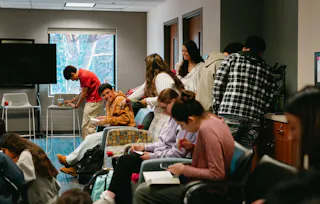
Each stage of life presents its own challenges, but college is perhaps one of the most unique of all. Often for the first time, students are away from home, no longer protected from the world or obligated to live by parents' household rules.
Morally, there are milestone decisions to be faced. Spiritually, many people get their first whiff of cafeteria-style religion—taking some of this, and leaving some of that, mixing and matching. Students are readily influenced by professors and other company they keep. Even students at faith-based schools like Bethel have to come to terms with what they believe.
"The great thing about Bethel University is that we aren't afraid of hard questions," says Jim Fereira, dean of students. "We offer a supportive environment for students to learn about and grow in their Christian faith."
The good news is that individuals entering adulthood today are among the most spiritually interested generation in decades, according to the University of California-Los Angeles' Higher Education Research Institute. Surveys showed that four in five college students have a strong interest in spirituality, and that many students have "high levels of idealism, are interested in the meaning of life, and are in some way religiously involved."
This age group is filled with great enthusiasm and energy as well as a passion for spiritual answers. It's a time when the seeds of Christian faith planted and watered over the years really begin to bloom. As Christian principles begin to make more sense in a lifestyle of worship, students are looking for authenticity, for something genuine.
Trying to navigate the needs of college-age students can be a difficult proposition. Jim Lo, incoming dean of campus ministries at Bethel, says: "We need to be willing to build relationships with students. College students want to be around older Christians. They don't want to be told what to do, though. They just want someone to listen and to share insights."
Lo says older Christians often are answering questions that college students aren't asking yet. Throughout his career working with college students, Lo has made it a point to meet with individuals as often as he can. It's never anything fancy—just two people hanging out at a coffee shop and talking.
That's exactly what Bethel freshman math major Kelly Lough '09 looks for in dealings with other generations. "I'm more interested in them sharing what they've been through rather than just telling me what to do," Lough said. "I love hearing stories about how God has worked in their lives."
Lo is new to Bethel University after working with young adults at Indiana Wesleyan University. One of his main goals is to equip students to be leaders so that they can also minister to their fellow classmates. "Young people are so full of energy," Lo says. "If we can channel that energy in a positive manner, they can make such an impact."

Life takes a whole different turn after college. Your friends move. The people and environment that defined you for most of your life suddenly change. Throughout the next few decades a lot of factors can either improve—or confuse—a person's spiritual journey. Challenges include pursuing a career, marriage, children, managing money, and facing real-life problems.
Those in their 20s and 30s deal with a host of identity issues. Who am I? Who can I trust? What is life really all about? Throw into that mix a culture that claims there is no absolute truth, and it's a recipe for getting stuck in spiritual quicksand.
Much like the college-age group, keeping a strong Christian walk in your 20s and 30s requires close relationships with others. "It's ideal that we have closeness with family during this timeframe," says Dan Rotach, adjunct assistant professor of psychology at Bethel and a licensed marriage and family therapist. "It's just as important to have a close group of friends to do life with, too."
Through these friends, mistakes and successes can be shared and real growth can occur. Finding a close group of friends after leaving the college setting can be a real challenge, though.
"I remember searching a long time for real community after I graduated," says Tyler Gregory '01 (bachelor's) and '05 (master's). "It felt weird for awhile to not see the same people every day like I did in school. Eventually, though, I was able to find community through my church."
The 20s and 30s age group is also learning to give back, as evidenced by their growing desire to be of service to their community. "My generation really wants to live out their faith instead of just talking about it," Gregory says. "They want to put that faith into action."

Those over the age of 40 or 50 have a whole new set of questions. With kids often raised and life having the potential to fall into the dreaded rut, these adults wonder, "Am I living a life of significance? Am I doing what I was called to do? What will the rest of my future look like?"
As is true in all previous life stages, a close network of family and friends can alleviate fears and stressors. Many in this stage choose to ‘reinvent' themselves, which can lead to a return to an educational setting to learn a new skill or start a new career.
"It's a hunger to grow within themselves," says Mike Price, director of admissions at Bethel's College of Adult & Professional Studies and Graduate School. "They want to increase their knowledge to be a better person or leader."
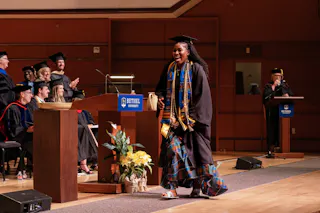
One person choosing such a path is Michelle Keeler. After raising two kids, Keeler returned back to school to finish her degree. She's currently pursuing a B.A. in Christian Ministries with hopes of teaching or counseling other women after she graduates.
"I feel that I'm on fire to know as much as I can," Keeler says. "Since I'm older I feel this sense of urgency to learn as much as I can, apply that to my life, and do some good work."
Keeler also sensed a hunger to
connect with God more deeply—something her Bethel classes have helped
her do. "I was starting to feel a void that material things couldn't
provide," says Keeler. "Learning more about God has made me more
content."
Adults going back to school at Bethel University also
appreciate the chance to develop close relationships, whether it's with
fellow classmates or faculty. The support helps adult learners make it
through a challenging span of years multi-tasking with a job, studies,
and family responsibilities.

With the first wave of baby boomers entering senior citizen status, a large number are making a return to church after a long hiatus. Many who rejected their religious upbringing as irrelevant in the modern world now face questions about ultimate meaning.
Even for those who have walked with the Lord all along, this age may usher in heightened spiritual hunger—even restlessness—and a desire to "finish strong." Besides dealing with declining health, seniors want assurance that they've spent their lives on something significant.
Depending on their spiritual state, seniors may be ruminating over unresolved sin or disappointments. They also may struggle with a changing church culture where styles of worship are vastly different than what they're used to.
These life changes can take a toll on seniors if they don't stay properly connected with their family and a church they can relate to.
"It's easy for the older seniors to drop out," says Harley Schreck, program director of Bethel's M.A. in Gerontology program, which has trained 60 specialists so far in this growing field. (Bethel Seminary is also launching a program track for special ministries to seniors.) "They can't assume that the process of spiritual growth and change is over. People do grow if their environment allows growth."
Dick Peterson of Maplewood is a good example of a senior who stays young by staying active. He recently joined the staff of Eagle Brook Church in Lino Lakes as a community care associate pastor.
"I've always stayed involved in the church," Peterson says. "As soon as you don't have that necessity to stay active, you start to get careless. You have to stay motivated."
Schreck says society often makes seniors feel compelled to give up serving in their church or community. But he stresses that all generations can benefit from the wisdom of seniors, and that great spiritual development occurs for both parties when seniors mentor someone younger.
With a spiritual grounding and sense of purpose, says Schreck, seniors can find a steady calm as they reflect on a lifetime of joys and struggles, births and deaths, and rich discoveries in their walk with God.
B.A. in Education, Pre-primary Specialty
Current students majoring: 62
Mission: To prepare educational leaders who understand how students
learn and develop, and who facilitate learning through effective
teaching.
Department chair: Louise Wilson, Ph.D.
Director of the Childhood Development Center: Robin Hasslen, Ph.D.
M.A. in Children's and Family Ministry (Bethel Seminary)
Current students majoring: 90
Mission: To develop an emerging cadre of professionals who minister to the needs of children and families.
Program chair: Denise Kjesbo, Ph.D.
B.A. in Youth Ministries
Current students majoring: 65
Mission: To develop leaders who can serve today's adolescents in the
multicultural church, parachurch, camping, or social service settings,
using a sound biblical and theoretical foundation.
Program chair: Karen McKinney, M.Div.
B.A. in Psychology
Current students majoring: 186
Mission: To understand and utilize sound psychological principles and
skills and integrate Christian faith with psychology through teaching,
research, and service.
Program chair: Joel Frederickson, Ph.D.
M.A. in Counseling Psychology
Current students majoring: 97
Mission: To prepare students to counsel or to proceed to doctoral
studies, furthering their understanding of psychology within a
Christian worldview.
Program director: James Koch, Ph.D.
M.A. in Gerontology
Current students majoring: 27
Mission: To prepare students to serve aging people professionally and
with deep empathy, recognizing their physical, psychological, social,
cultural, economical, and spiritual needs.
Program director: Harley Schreck, Ph.D.
Office of Student Life
Dean of Students: Jim Fereira, M.A.
Office of Campus Ministries
Incoming Dean: James Lo, D.Th.