
Come as you are.
Become who you're called to be.
At Bethel, you’ll discover how you're meant to make a difference. In our welcoming, Christ-guided community, you’ll experience personal transformation and outstanding preparation for life, leadership, and your career—all to propel your life forward and fulfill your purpose.

Become A Bethel Student
Apply now
You belong at Bethel. If you're ready to see who you could become, start your free application today.
Schedule Your Visit
Visit Bethel
in person or online.
Experience Bethel for yourself!
Connect with us virtually or visit campus, where you'll find:
- amazing facilities and state-of-the-art labs where you’ll learn and grow
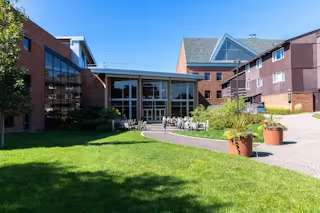
- a safe and serene campus tucked on 247 acres of wooded, lakeside property
- a great location in the heart of the Twin Cities, just 15 minutes north of St. Paul and Minneapolis
Plan your
campus visit
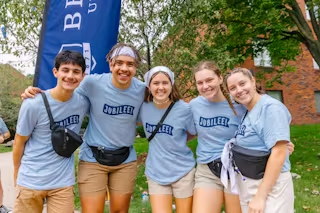
The best way to learn about our community is to experience it for yourself. Let us show you around!
Take a virtual tour
Before you visit, explore campus online and learn more about what day-to-day life at Bethel looks and feels like.
Upcoming events

Minnesota Private Colleges Week
June 23-27
Explore Bethel during Minnesota Private Colleges Week! Join us for a free campus tour, hear from admissions staff, and enjoy an ice cream social. Morning and afternoon sessions are available—come discover what makes Bethel a place where you belong.
Summer arts and academic camps
June
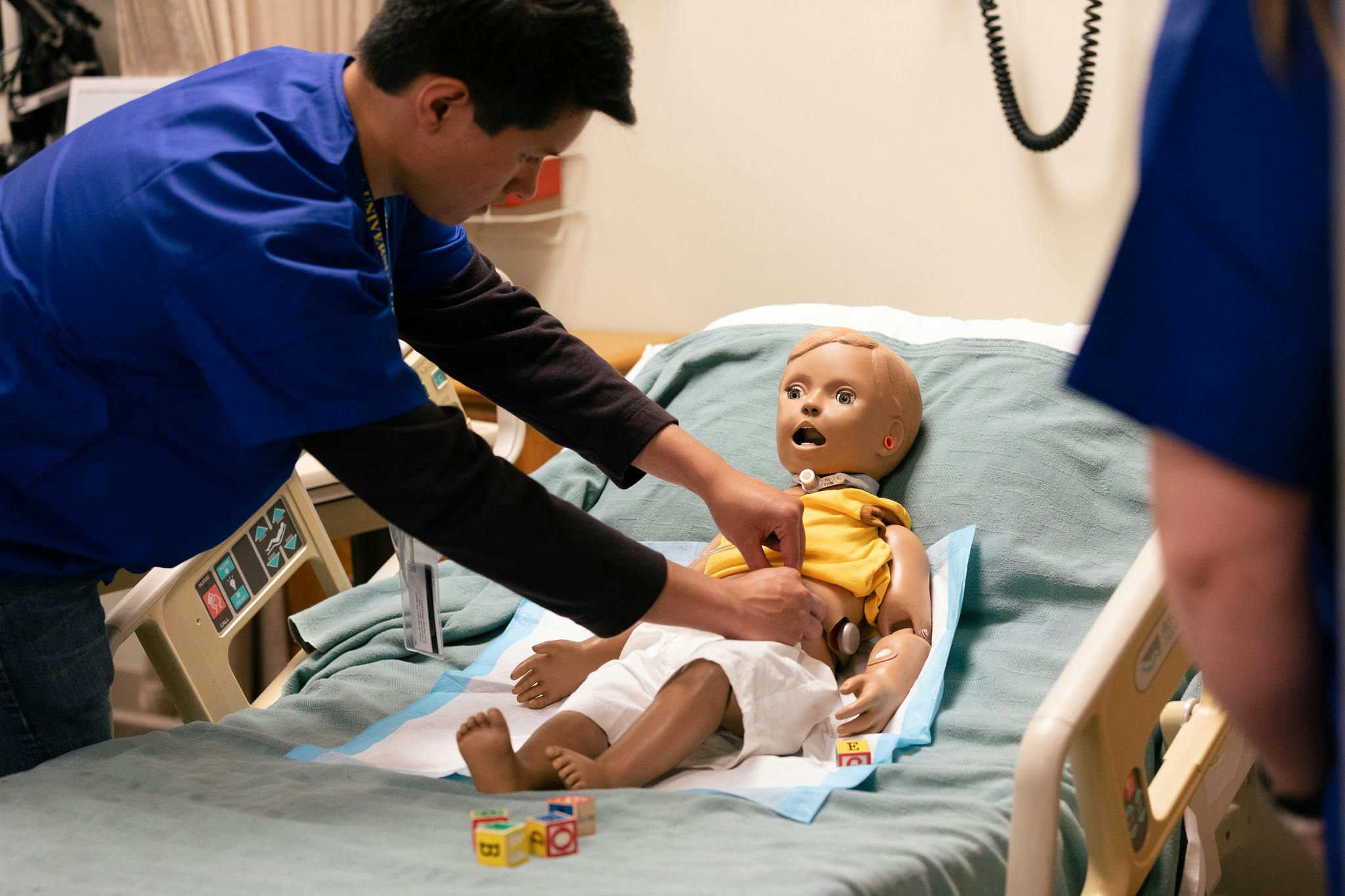
Explore your passions at Bethel’s arts and academic camps this summer! Programs in business, theology, healthcare, music, forensics, Spanish, and more help students—mostly high school age—grow intellectually, creatively, and spiritually.

Summer athletic camps
June-July
Sharpen your skills, build confidence, and have fun at Bethel’s athletic camps! Led by expert coaches and student-athletes, our Christ-centered camps offer day and overnight options in basketball, football, soccer, tennis, and volleyball. Spots fill fast—register soon!
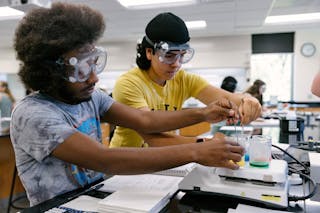
Transformational Academics
Explore our programs
No matter where you are in your journey, Bethel has a program to propel your life and career forward. You’ll find associate, bachelor’s, master’s, and doctoral degree offerings in more than 100 areas of study, including business, healthcare, and education.
Undergrad
Majors and minors in engaging subjects that stretch and challenge recent high school grads.
Adult Undergrad
Undergraduate programs—most of which are fully online—designed for adults looking to complete or begin their college degree.
Graduate
Advanced degree programs that prepare professionals for meaningful work in their careers and communities.
PSEO/Early College
Programs that help students get a head start on their college degree while completing high school requirements.
Seminary
Graduate programs that develop leaders for service in theological, pastoral, and ministry settings.
BUILD Program
A supportive and comprehensive educational experience for individuals with intellectual disabilities.
Find your major or program

Accessible education
Tuition and financial aid
The cost of your education should be simple, authentic, and transparent. That's why beginning in the 2025-26 academic year, tuition for the College of Arts & Sciences will be $25,990, down from $44,050.
This new rate pushes back on what has become a confusing industry standard—increasing list prices and providing significant tuition discounts. With a clear price, you can focus on what truly matters: your education and your future.
98%
of students receive financial aid
99%
recent graduates are employed or continuing their education
#1
highest return on investment after 10 years among Christian College Consortium schools
- Georgetown University Center on Education and the WorkforceFaith at Bethel
Guided by Christ
At Bethel, faith is infused in all we do and in every program, from business to biology. Christ is the compass giving our lives direction. But no matter where you come from, you’ll find a place where you belong at Bethel. Because here, we’re on a journey together.
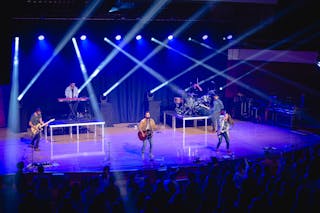
Community at Bethel
Supported by each other
At Bethel, you’ll feel at home the second you step foot on campus or connect online. You'll find a community that supports who you're becoming, and you'll develop your gifts to make an impact on our world. Together, we strive to do big things—and they’re bigger because we don’t have to do them alone.



Recent news
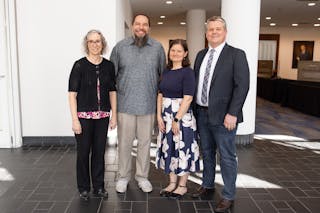
Bethel celebrates exemplary employees at inaugural Royal Recognition Awards Night
May 16, 2025 | 11 a.m.
Tornado Warning May 15
May 15, 2025 | 2:40 p.m.
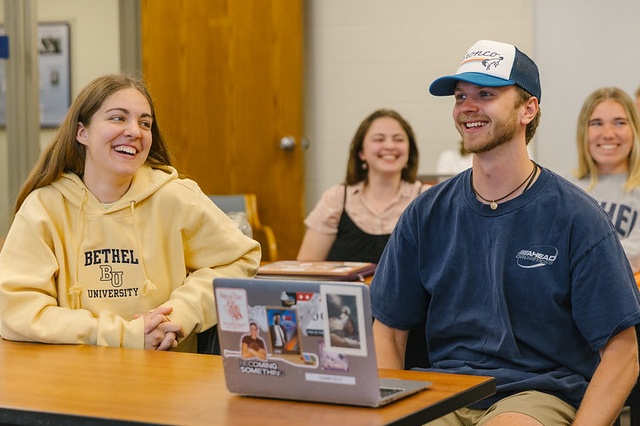
Home away from home: living on Bethel’s campus
May 13, 2025 | 10:10 a.m.

Events
MAY 21 2025
MAY 22 2025
Nothing But Personal Senior Thesis Reception
5 p.m. Johnson Gallery
Nothing But Personal Senior Thesis May Exhibition 2025 Reception
MAY 23 2025
Baccalaureate Service and Royal Reception
5:30 p.m.
A time of worship and celebration for Undergraduate seniors and their families.
MAY 24 2025
7 p.m.
For graduating students in the College of Adult Professional Studies and Graduate School
Latest blog posts

Visit
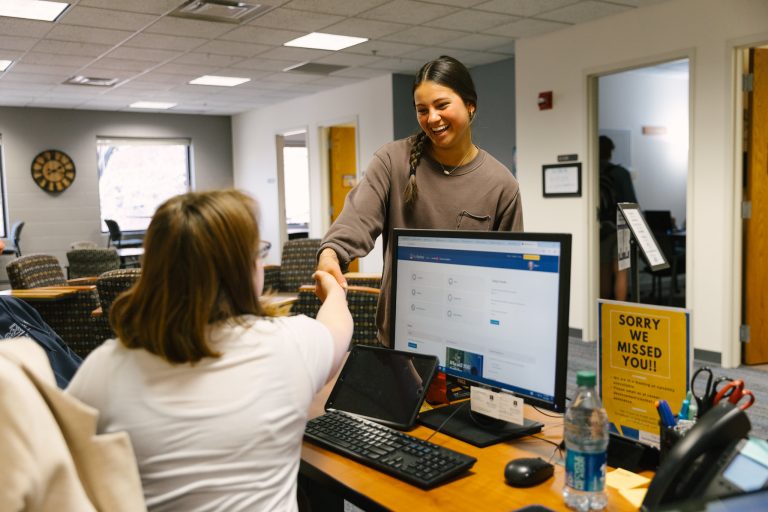
Why Bethel? See for yourself. Join us for a campus visit or sign up for an online info session and get to know our exciting community.
Inquire
Want to learn more about what Bethel has to offer? We're happy to get you the information you need.